


Appia – paving the way for a future-ready, integrated financial ecosystem leveraging tokenisation and DLT
Executive summary
The Appia initiative is the cornerstone of the Eurosystem strategy to provide central bank money within innovative, tokenised wholesale financial markets that leverage technologies such as distributed ledger technology (DLT). Between May and November 2024 the Eurosystem carried out exploratory work on new technologies for wholesale central bank money settlement, with 64 participants conducting over 50 trials and experiments.[1] In June 2025, the ECB’s Governing Council approved a plan to transform the findings of the exploratory work into a strategy. This strategy consists of Pontes, which will build on interoperability to offer central bank money settlement for DLT transactions to the market, and Appia, which will focus on working with the market to develop an entirely innovative and integrated financial market ecosystem embracing tokenisation and DLT. These undertakings complement the continuous efforts made to improve and modernise the Eurosystem’s existing market infrastructures (i.e. TARGET Services).
With Appia, the Eurosystem is seeking to leverage DLT to achieve the following objectives:
- ensure the effectiveness of monetary policy and financial stability and the smooth functioning of payment systems by maintaining central bank money[2] as the anchor of a two-tier monetary system;
- foster a more integrated, competitive and innovative payments and securities ecosystem through efficient infrastructures for financial markets;
- support strategic autonomy and increased resilience;
- ensure the relevance of the euro as an international currency.
The characteristics of DLT will help achieve these objectives. DLT allows for efficiency improvements as transactions can be programmed and the execution of operations bundled over an asset’s entire lifecycle (issuance, trading, settlement, custody, servicing, etc.) on a single platform. It allows multiple parties to share a basic infrastructure that these can use to compete on services. This arrangement could help overcome the siloed nature of the current market infrastructures in Europe and lower barriers to entry. DLT infrastructures are, by design, able to host multiple types of assets (including settlement assets other than central bank money), thereby further facilitating market integration and efficiency.
With these objectives in mind, the Eurosystem will investigate ways to support the development of DLT networks that function as basic infrastructures, establishing European governance and using common standards. DLT networks are well suited to serving as a basic infrastructure on which the public sector and market players can provide their services, which could lower barriers to entry and increase the potential for innovation. Adopting this technology for wholesale financial services thus represents an opportunity to move towards a more integrated and innovative financial market. To reap the benefits for the European market, it is essential to ensure that common standards are implemented (to avoid fragmentation) and European governance established (to avoid critical dependence on foreign providers).
Through a combination of analytical and practical work, the Eurosystem will assess possible DLT network configurations under different scenarios. It is essential to do this, since the extent to which different configurations for the future ecosystem (e.g. whether based on a single network shared by the whole market or on multiple interoperable networks) meets the desired Eurosystem objectives will depend crucially on technological, market and broader external (economic and geopolitical) conditions.
With Appia, the Eurosystem aims to deliver a blueprint for a future long-term solution by 2028, in cooperation with both public sector and market stakeholders. This blueprint will define the Eurosystem’s role within a tokenised wholesale financial ecosystem and provide guidance on fostering an efficient (tokenised) ecosystem and new innovative market structures.
While the Appia analysis is ongoing, market participants will already be able to settle DLT-based transactions in central bank money through Pontes. Pontes will provide a bridge between market DLT infrastructures and the Eurosystem’s TARGET Services as early as end-Q3 2026. This will allow the financial industry to develop and scale their DLT-based offerings, with the certainty that they can use the safest possible settlement asset. Pontes will be enhanced with additional functionalities in the coming years, including on the basis of input from Appia. This input will be provided in a staggered manner, in order to allow incremental enhancements to the Pontes product to be implemented on aspects for which analyses have been completed while ongoing research continues to address other aspects within Appia. Eventually, the enhancements to the Pontes product will allow it to evolve into a component of the envisaged Appia ecosystem.
In view of Appia’s holistic scope, the Eurosystem will work closely with market stakeholders and public sector bodies to develop the envisaged blueprint. In addition, the analysis under Appia will benefit from engagement with academia.
The Eurosystem invites feedback from market and public sector stakeholders on the approach set out in this paper and expressions of interest in contributing to the forthcoming analytical and practical work. To this end, a feedback questionnaire is published alongside this paper. Feedback received will inform further work and the blueprint.
Introduction
Central bank money is the safest and most liquid settlement asset. The fundamental role it plays in the economy means that its provision should observe the principle of technological neutrality, where feasible. The Eurosystem already makes central bank money available in digital form and enables wholesale transactions to be settled in central bank money. It does this through its TARGET Services, which support the seamless flow of cash, securities and collateral across and beyond Europe. The Eurosystem continuously modernises its offering to ensure that its TARGET Services remain future-ready and meet market needs and expectations, with technological innovation being an important driver of adaptation. In recent years, the Eurosystem has consolidated T2 and T2S onto a single modernised platform, launched a single collateral management system (ECMS), opened up its payment systems to non-bank payment service providers and launched initiatives to improve cross-border payments by interlinking fast payment systems. Now the large-scale and permanent adoption of distributed ledger technologies (DLT) by market participants calls for action on the central bank side to align practices with technological advances. Recently, the Eurosystem announced that it will accept marketable assets issued in central securities depositories (CSDs) using DLT as eligible collateral for Eurosystem credit operations as of 30 March 2026, and that it is exploring the possibility to accept assets issued using DLT and not represented in CSDs in the future. On the market infrastructure side, market adoption of DLT requires a new stream of innovations to make the provision of central bank money compatible with emerging DLT ecosystems. This would be needed to support the settlement of the cash leg of DLT-based wholesale transactions.[3]
The exploratory work conducted by the Eurosystem in 2024 confirmed there is market demand for, and interest in, the settlement of DLT-based wholesale transactions in central bank money. There is an active and rapidly developing ecosystem of incumbents as well as new entrants in Europe that have built up DLT capabilities and are now looking to scale up and grow their DLT offerings, reflecting worldwide trends. The availability of central bank money has been identified by the market as a prerequisite if financial markets based on DLT are to scale up and develop in a safe and stable way, thereby facilitating the establishment of innovative financial services conducive to increased competition and enhanced efficiency.[4] Bringing central bank money into the DLT ecosystem could also contribute to greater integration within the financial market, given DLT’s potential to bring together different entities providing financial services along the value chain on a shared infrastructure.[5]
Consequently, in the first half of 2025 the ECB's Governing Council approved a single programme to enable the settlement of DLT-based wholesale transactions in central bank money.[6] Two complementary tracks were developed in parallel and designed to reinforce each other:
- Pontes: an operational offering that builds on interoperability to settle DLT-based wholesale transactions in central bank money already in the short term;
- Appia: an analytical and exploratory initiative that investigates possibilities for a future‑ready, innovative and integrated European financial DLT-based ecosystem, developing common standards, policies and functional building blocks.
Pontes will allow market players, including those that took part in the Eurosystem’s exploratory work in 2024, to further develop their services, thereby supporting market developments while maintaining the anchoring role of central bank money. As such, it constitutes an important step towards an innovative and integrated tokenised financial market. There will be an initial product launch for Pontes in the third quarter of 2026 to address immediate market demand.
With Appia, the Eurosystem will focus on the further exploration and development of an innovative and integrated tokenised financial ecosystem in Europe. In order to fully reap the expected benefits of DLT and tokenisation, Appia will provide an in-depth analysis of the barriers to an integrated and innovative tokenised financial market in Europe and will propose ways to overcome such barriers from the start. Progress is being made towards different solutions, each with specific data standards, technical implementations and operating models. This progress should be nurtured while managing the risk that it leads to a new fragmentation which, in addition to the multiplicity of un-harmonised legal frameworks in Europe[7], would prevent interoperability and compatibility across DLT-based financial networks and services and would foster inefficiencies. For the provision of tokenised central bank money, Appia will explore options that are more integrated into the wider new financial ecosystem, going beyond the interoperability model delivered by Pontes. The design of this new ecosystem will build on strong public-private cooperation.
These efforts to make use of DLT and tokenisation in wholesale financial markets complement the continuous efforts being made to improve and modernise the Eurosystem’s existing market infrastructure services. The Eurosystem’s TARGET Services will continue to play a pivotal role in supporting the implementation of monetary policy, preserving financial stability and fostering the integration of European financial markets. Recognising the importance of innovation, the Eurosystem is committed to continuously improving its services to keep pace with technological advancements, evolving market needs and the demands of an increasingly digital economy. With a view to promoting the overall efficiency of the payment system, the Eurosystem will ensure that the existing and new infrastructures interact smoothly.
For the remainder of this paper:
- Section 2 covers the motivation behind the Eurosystem’s work programme on DLT for wholesale financial markets, including the objectives it aims to achieve under Appia and high-level principles for the future ecosystem that complement such objectives;
- Section 3 covers the conceptual framework to be used for the analysis under Appia, the emerging elements of a conceptual vision of desired policy outcomes for the future ecosystem and the main features of this ecosystem to be further investigated under Appia;
- Section 4 covers the approach the Eurosystem intends to take in Appia, including consideration of the envisaged involvement of market and public sector stakeholders and the common roadmap for Pontes and Appia;
- Section 5 covers the building blocks on which the analysis under Appia will be structured;
- Section 6 sets out the next steps.
Motivation
The potentially transformative role of DLT
If designed appropriately, DLT could be highly transformative in the financial market. This new technology makes it possible to rethink current processes and the distribution of roles. It also supports the establishment of innovative services which might be conducive to increased competition, enhanced efficiency and higher integration within the financial market.[8] As evidenced by the exploratory work conducted by Eurosystem together with the market in 2024, the benefits of DLT providing a technical infrastructure for various assets and services go beyond the pure settlement layer in central bank money to cover the whole value chain. DLT could enable the full lifecycle of a financial transaction to be integrated, covering the issuance, trading, settlement, custody and servicing of the assets. This could make transactions more efficient. Efficiency could be further increased through the use of smart contracts[9], allowing operations to be validated, executed and recorded automatically as soon as certain predefined conditions have been met. Conditional settlement allows the simultaneous settlement of the cash and the securities leg of transactions, thereby making transactions safer by reducing settlement risks. Moreover, DLT is well suited to supporting 24/7/365 operations with possibly instant settlement, potentially increasing flexibility. Finally, DLT might lower entry barriers for new players entering the ecosystem.
The objectives of the Eurosystem in enabling central bank money settlement on DLT
With Appia, the Eurosystem seeks to achieve the following objectives.
- Ensuring the effectiveness of monetary policy and financial stability and the smooth functioning of payment systems by maintaining central bank money as the anchor of a two-tier monetary system. The Eurosystem preserves the role of euro central bank money as the safest settlement asset for financial transactions. This plays a key role in the stability of financial markets and also supports compliance with CPSS-IOSCO’s principles for financial market infrastructures.[10] These include the stipulation that financial market infrastructures should conduct their settlements in central bank money where practical and available. With Appia, the Eurosystem is seeking to enable Europe to embrace innovation, without compromising on safety, financial stability or settlement efficiency. Should financial markets move decisively on DLT they need a safe settlement asset, which is free from credit and liquidity risks. Central bank money is the ultimate risk-free settlement asset and as such provides a monetary anchor to the financial system, including for tokenised markets.
- Fostering a more integrated, competitive and innovative payments and securities ecosystem through efficient infrastructures for financial markets. In line with the ESCB Statute and the Treaties, the Eurosystem has the mandate to ensure that clearing and payment systems are sound and efficient. Moreover, the Eurosystem supports the further integration of European financial markets, facilitating the smooth and even transmission of ECB monetary policy. It thus promotes the smooth functioning of financial markets, thereby reducing costs and fostering competition and innovation. This will also contribute to the EU’s savings and investments union initiative. With Appia, the Eurosystem is seeking to use DLT to support Europe’s progress towards a more integrated financial market, in line with the ECB Governing Council’s statement on advancing the Capital Markets Union of 7 March 2024. First, leveraging DLT will immediately offer an opportunity to create a more integrated European financial market for digital assets, complementing efforts to remove current limitations to integration in the market for traditional assets. Second, it will prepare the ground for practical improvements in the way markets function, which could ultimately increase the scale and further the development of the European financial market.
- Supporting strategic autonomy and increased resilience. The Eurosystem, under the European System of Central Banks (ESCB) Statute and the Treaties, preserves the stability, ensures the strategic autonomy and increases the resilience of the monetary and financial systems. With Appia, the Eurosystem is seeking to safeguard Europe’s strategic independence in financial markets, ensuring that European tokenised financial markets are not critically dependent on foreign infrastructures, laws or technologies in times of stress or in the event of geopolitical fragmentation. Offering a trusted public settlement asset in tokenised form in euro would support the safe development of regulated private settlement assets in euro (like tokenised deposits or stablecoins), allowing the private sector to innovate while remaining anchored to central bank money. It would serve as a bridge across regulated private settlement assets, helping to maintain the singleness of money and the two-tier monetary system, in which central banks provide the foundation for money while commercial banks facilitate its distribution to the broader economy. This principle would safeguard the operational resilience and integrity of financial market infrastructures, while preserving authorities’ effective capacity to supervise, intervene and, where necessary, influence these infrastructures in the pursuit of financial stability and broader public policy objectives. At the same time, it would allow these infrastructures to remain open, interoperable and globally connected, without giving rise to critical dependencies that could undermine monetary sovereignty or the smooth functioning of markets.
- Ensuring the relevance of the euro as an international currency. The Eurosystem supports the euro’s attractiveness to international financial markets and as a reserve currency. With Appia, the Eurosystem is seeking to enable easier access to European financial services and cross-border payments, thereby enhancing the euro’s attractiveness as a settlement asset globally. This would lower entry barriers for foreign investors and bolster the euro’s international presence.
High-level principles
A set of high-level principles has been established to support the development of a clear implementation roadmap and complement the above objectives. These principles should help guide progress on Appia towards identifying a future-ready solution. They should ensure that the approaches, designs and ideas currently being analysed or tested within Appia remain aligned with the objectives, without prescribing or prejudging future specific legal, technical or operational implementations. For the avoidance of misunderstanding, the principles are presented in no particular order of priority, given the different perspectives behind each of them.
Since some of these principles go beyond the scope of the services to be provided by the Eurosystem, they will be discussed with the relevant public and private stakeholders and aligned with expectations for Appia. From the Eurosystem’s perspective, Appia aims to provide liquidity to an ecosystem that has the following characteristics.
- Central bank money as the anchor. The Appia ecosystem should enable settlement in central bank money. It should preserve the ability of the Eurosystem and other participating central banks[11] to keep control over the central bank money they issue at any moment and in any situation (e.g. issuance and supply, access, distribution, circulation and redemption). Furthermore, the design of tokenised central bank money should ensure monetary policy is implemented effectively and should adapt to its future needs.
- Market access and integration. The Appia ecosystem should enable its stakeholders to reach all EU assets and services. It should eliminate technical or commercial barriers and allow assets and cash to function as closely as possible to a single pool, minimising liquidity and asset fragmentation.
- Innovation. The Appia ecosystem should leverage technological capabilities (such as programmability[12], composability[13] and 24/7/365 availability). It should remain adaptable to new technological solutions while avoiding technology or vendor lock-in.
- Competition and contestability. The Appia ecosystem should be open and contestable, fostering competition focused on the quality and pricing of services.
- Efficiency. End-to-end processing should be real-time, enable atomicity[14] and be instantaneous. It should also have flexibility for non-instantaneous execution based on market practices (e.g. enabling liquidity-saving measures).
- Sustainability. The Appia ecosystem should support environmental sustainability, reducing energy consumption and minimising its environmental footprint.
- Robustness. The Appia ecosystem’s technical environment should be robust, ensuring its reliability and its resilience to physical and cyberattacks (including in a quantum-proof sense).
- Legal certainty. The Appia ecosystem should comply with all relevant legal and regulatory frameworks including financial regulation (such as ensuring settlement finality) as well as other requirements (such as privacy). At the same time it should remain adaptable to evolving market practices and policy requirements.
- Governance and control. The Appia ecosystem should comply with Eurosystem policies and should operate under transparent governance. It must not be critically dependent on foreign infrastructures or laws and should preserve European authorities’ effective capacity to supervise, intervene and, where necessary, influence market infrastructures in pursuit of financial stability and broader public policy objectives.
- Scalability. The Appia ecosystem should handle increasing workloads to support growth in the volumes of assets and services in DLT wholesale financial markets.
Conceptual basis for the analysis
Conceptual framework
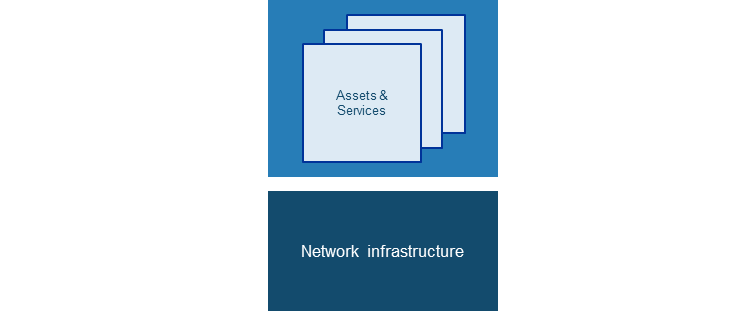
Stylised DLT architectures can be analysed in layers. The network layer (the basic infrastructure) is responsible for the technical processing of transactions, the objective being to ensure the integrity of the ledger, (for example the feature that the transaction cannot be arbitrarily modified or an asset simultaneously used more than once). The network is a set of nodes (in essence individual computers or servers) distributed across different entities that store a copy of the shared ledger and receive, verify and broadcast transactions to the rest of the network. As such, it can serve the purposes of a utility for all assets and services provided on the network.
In the assets and services layer, DLT networks can accommodate a multiplicity of settlement and investment assets (e.g. central bank money, private settlement assets, securities) and related services (e.g., issuance, settlement custody), each with its own governance (e.g. who operates it, who can access it, who can see the data). Assets and services are provided using smart contracts, which allow for certain functions to be built in through automation. For example, participants could provide a financial asset by deploying a smart contract detailing the rules and characteristics of this asset, as well as additional smart contracts (e.g. payments, delivery-versus-payment) defining how the asset can be used for wholesale financial transactions.
Figure 1
DLT architecture layers
Emerging elements of a conceptual vision
A first set of intended policy outcomes emerges from the objective and principles described above. A fully developed and articulated vision of the resulting DLT ecosystem will only emerge after the Appia work has concluded and will be reflected in the resulting blueprint.
First, while duly acknowledging the diversity of the DLT ecosystem in terms of networks, the Eurosystem considers, as a preliminary analysis, that achieving its objectives requires the network layer to function as a shared utility, providing all participants with equal and non-discriminatory access. A shared utility here is an open and neutral infrastructure that operates in a way that is accessible, unbiased and transparent to all users and stakeholders. This results in market synergies that mutualise infrastructure costs and investments and lower barriers to entry in the market, as new entrants can use the existing shared utility to provide financial services and may not need to create their own infrastructure to do so. Networks aiming to fulfil this role would need to be designed to provide equal access and functionality, without favouring specific groups or interests. The governance model for such a utility should address both Eurosystem requirements (control, reliability, etc.) and market needs, while delivering the right incentive structure for competing and contestable markets. This would imply dedicated governance, distinct from the entities providing financial services (e.g. CSDs, central counterparties, banks, platforms operating under the DLT Pilot Regime) on the assets and services layer.[15] It is acknowledged that there may be certain dependencies between these layers (e.g. relating to consensus mechanisms[16] which are set at the network level that have implications for service provision).
Second, with a view to supporting strategic autonomy, the Eurosystem holds that European market stakeholders should primarily rely on utilities that are located, operated and governed in Europe and are subject to European legal and regulatory frameworks.[17] This should be enshrined in governance and related requirements. Further criteria (such as those related to the ownership structure of key actors) may also be defined. Furthermore, strategic autonomy requires developers, technological providers and market expertise on tokenisation to be widely available to support the development of applications (and/or networks) based in Europe. The joint efforts made by the Eurosystem and other public and private stakeholders to develop the European DLT financial ecosystem under Appia should address these aspects.
Finally, the Eurosystem believes that fostering an ecosystem of competing services across the value chain running on a shared utility at the network layer requires compatibility through the application of common standards, rules and practices. This would enable open and fair competition in wholesale markets, as stakeholders with access to a shared utility could easily and seamlessly access a whole range of financial services, with a choice of providers for every market segment.
Main features of the future ecosystem
The future Appia ecosystem will entail two sets of main features, each of which will potentially have multiple implementation options. The extent to which the Appia ecosystem will meet the desired policy outcomes described above may differ based on the decisions made for each individual feature. It will therefore be necessary to investigate the options for each feature as well as how features interact with each other, in order to arrive at a preferred overall configuration. This investigation will include an assessment of options against the Eurosystem’s objectives and high-level principles.
A first key feature is whether central bank money settlement will be possible on a single network or on a multitude of networks.
A single network could be established as a shared utility to support both Eurosystem and private financial market services. The Eurosystem could enable central bank money settlement and collateral mobilisation (for monetary policy refinancing operations) on this single network (which would also host financial market services provided by other entities, and private settlement assets). This single network would, by design, avoid fragmentation and could bring together the full value chain of wholesale financial markets (although variants where part of the value chain remains outside this single network could be conceivable). As such, there would then be competition on services but not on infrastructures (i.e. the network layer), as there would be just one single utility for the entire market. Strong governance would be needed to ensure it continues to function as an open utility and is able to meet evolving needs, given the significant dependence there would be on this single network.
An alternative to the single network approach could envisage a landscape with multiple linked networks where central bank money settlement would be possible. Multiple networks offer redundancies that can enhance resilience and can, depending on their set-up, foster competition and facilitate innovation. There could be both competition on services and competition on infrastructures from different utilities. For such a set-up to reap the potential efficiency benefits of DLT, the individual networks would each need to be able to serve the full value chain (or at least the core part of it, which will be further specified as the analysis under Appia progresses). Furthermore, it would be necessary to achieve a sufficient level of standardisation and interoperability between networks to avoid the emergence of siloes and the fragmentation of liquidity and assets. Different ways of achieving interoperability (e.g. synchronisation or transferring assets between networks) would need to be assessed.
A second set of key features relates to the governance, control and operation of the network(s).
The Eurosystem could provide its core services on a network it operates directly or it could provide them on one or more networks where governance is shared with other parties. In all cases it must be ensured that the Eurosystem and other stakeholders are able to control[18] their own assets and services and that the network is safe, resilient and efficient. Operating a Eurosystem-managed DLT would reduce external dependencies and would ensure the resilient provision of core Eurosystem services such as central bank money settlement and the mobilisation of tokenised assets as collateral for monetary policy refinancing operations. As part of the Appia roadmap, the Eurosystem will analyse whether it might become involved in the network hosting services of other parties and in the governance of networks not directly operated by the Eurosystem. The outcome of this analysis may depend on the type of network (e.g. private permissioned versus public permissionless networks). The choice of consensus mechanisms is one of the decisions that have significant implications for the Eurosystem’s control over central bank money access and integrity. The roles of the Eurosystem and other stakeholders, including whether the Eurosystem should act as a validator or whether it should delegate this role to trusted third parties, needs to be analysed.
The extent to which the future ecosystem meets the desired policy outcomes will depend crucially on the technological, market and broader external conditions (economic, regulatory and geopolitical) in which the ecosystem develops. The Eurosystem will therefore analyse scenarios under which combinations of features, such as those described in the following section, would be expected to deliver the desired policy outcomes. This scenario analysis may, for illustrative purposes, consider market dynamics (including the adoption and the role of private settlement assets such as tokenised commercial bank money and stablecoins), legal and regulatory developments in Europe (including the potential emergence of international standards) and international developments (including approaches taken by other jurisdictions and the potential emergence of shared cross-border or international networks).
Approach
General approach
The Eurosystem will investigate DLT network configurations that could meet its objectives and high-level principles. Key aspects to consider are how, where and to whom the Eurosystem provides its services (central bank money and collateral) and how the value chain of wholesale markets is structured. The exploratory work conducted by the Eurosystem in 2024 also highlighted fragmentation issues stemming from a lack of standards and interoperability between networks.
In order to achieve its strategic objectives and its desired policy outcomes, and to advance successfully, the Eurosystem intends to:
- inform the market (issuers, commercial banks, market infrastructures operators, fintechs, etc.) and the public sector of its expectations and discuss these with stakeholders through a continuous, structured open dialogue;
- investigate design choices based on qualitative and quantitative analytical and practical work and adopt the conclusions of this work, by following an evidence-based decision-making process;
- minimise sunk costs or non-reusable investments by providing early guidance to the market, thereby ensuring that efforts and investments are aligned;
- achieve timely delivery to the market by defining high-level requirements and determining lean implementation steps;
- remain adaptable to new developments by following a flexible and modular approach, so that new requirements and innovative features may be included as they appear over time;
- be experimental in fostering continuous innovation through targeted proofs of concept and experiments, while also considering learnings from Pontes.
Market and public sector involvement
In view of Appia’s holistic scope, the Eurosystem will work closely with market stakeholders and public sector bodies to develop the envisaged blueprint. On the market side, this will include those with access to central bank money but also, more broadly, parties with an interest in the use of DLT in wholesale financial markets (covering the whole value chain). On the public sector side, this will include the European Commission, the European Securities and Markets Authority, the European Banking Authority and the European Investment Bank. In addition, the analysis under Appia will benefit from engagement with academia.
Market and public sector stakeholders will be engaged in different compositions, contexts and capacities, including as:
- users of a Eurosystem production offering (Pontes), which will also provide important information for Appia;
- partners in targeted experimentation to validate possible features of the future ecosystem and to explore innovative use cases;
- part of a public-private partnership to foster shared utilities, and as possible future operators and users of such networks;
- contributors of standards, rules and practices needed for an integrated ecosystem;
- legislators, regulators and supervisors;
- a sounding board composed of a wide variety of stakeholders including (but not limited to) the roles listed previously, providing feedback overall on the Eurosystem work and planned next steps.
At the current juncture, the Eurosystem is inviting market and public stakeholders to provide feedback on the approach set out in this paper and express their interest to contribute to the analysis. Section 5 sets out further concrete activities where the market and the public sector make a contribution.
A shared roadmap for Pontes and Appia
Appia is part of the Eurosystem’s broader strategic initiative on the use of distributed ledger technology (DLT) in wholesale financial markets, which also encompasses Pontes. Appia’s analysis, considerations and findings will be taken into account in Pontes, and vice versa, to ensure the approach adopted is aligned, consistent and coordinated.
Appia will deliver on high-level requirements that may also feed into the design of Pontes enhancements, adopting a staggered approach. The staggered approach will allow parts of the analysis to be completed and related Pontes enhancements that are relevant and viable to be implemented. This can be done without necessarily waiting for the full Appia analysis to be completed.
Once the analytical and practical work has been completed, Appia will deliver a blueprint for a future long-term solution. This blueprint will set out not only the proposed Eurosystem responses to tokenisation but also the market’s view on how to develop an efficient (tokenised) ecosystem and new market structures in line with the Appia objectives. Delivery of this blueprint is envisaged in 2028.
Figure 2
High-level timeline for Pontes and Appia

Appia building blocks
The Eurosystem has identified six building blocks for Appia, which will be developed via analytical and practical work. The work on building blocks will inform the Eurosystem and market stakeholders about the feasibility of implementation options. The Eurosystem thus invites public and market stakeholders to become involved in these Appia building blocks.
Building Block 1 – Asset interoperability and standards
To move towards a long-term integrated ecosystem, the first step will be to analyse interoperability between market DLT platforms, ensuring that assets can be transferred across market DLT platforms. This will require (i) the necessary interoperability and asset transfer mechanisms to be available and (ii) tokenised assets and DLT smart contracts in Europe to follow compatible standards and data formats across platforms. The activities envisaged under this building block include analytical work on the requirements for interoperability and asset transfer mechanisms, as well as the legal and policy implications of transferred assets. They also include practical work that will test different interoperability mechanisms and compare different approaches to transferability and control for different types of assets. The Eurosystem aims to engage with the relevant technological players providing interoperability, discuss with the market the implications of asset transferability for business models and work alongside the relevant stakeholders to co-develop standards.
Building Block 2 – Monetary policy implementation and collateral management on DLT
Under this building block, the Eurosystem will investigate how it could conduct monetary policy operations and collateral management on DLT. This includes operations such as liquidity provision and absorption. Furthermore, improving the liquidity of DLT-based assets by granting collateral eligibility to DLT-based assets will be critical to enhancing the scalability and attractiveness of DLT-based markets in Europe. To do this, the Eurosystem will need to make progress on the related policy aspects as well as the specific technical and operational aspects, including whether – and if so how – to control mobilised assets on DLT(s) not fully operated by the Eurosystem. This will build on the work carried out on standards and data format under Building Block 1 as well as the possibility of transferring assets across platforms to ensure collateral mobility. Activities envisaged under this building block include analytical work on assessing network configuration variants and a market impact analysis. Also included is practical work that will test technical and operational issues, such as how to control mobilised assets on those DLT(s) that are not fully operated by the Eurosystem. The Eurosystem aims to engage with the market to gather input on various aspects (e.g. liquidity implications) for the market impact analysis.
Building Block 3 – European tokenised central bank money infrastructure(s)
The Appia blueprint will need to detail the type(s) and scope of infrastructures on which tokenised central bank money will be provided in Europe. This should include, as a minimum, the euro and other currencies made available by their respective central banks in TARGET. The number and scope of these infrastructures (e.g. whether central bank money only or also investment assets such as securities and/or regulated private settlement assets in TARGET currencies and/or other official currencies) are aspects that will also build on Building Block 2 (e.g. whether a single platform for collateral mobilisation is needed). A key question to answer in this context is whether – and if so how – the requirement for central bank control over central bank money can be met under different infrastructure configurations. Another key aspect to consider will be the governance of such infrastructure(s), the role of the Eurosystem and the impact on existing Eurosystem market infrastructures (i.e. TARGET Services), their operation and development (respective to market players). Activities envisaged under this building block include analytical work on infrastructure configurations for tokenised central bank money as well as practical work focused on developing and testing prototypes. The Eurosystem aims to engage with public and private stakeholders to define European standards for infrastructures, discuss governance frameworks and explore the potential impact on market stakeholders’ business models.
Building Block 4 – The international dimension and cross-border links
The Appia blueprint should consider how the other Appia building blocks can be interconnected and interoperable with DLT ecosystems outside Europe in a way that further promotes the attractiveness of the European market and the international role of the euro. This will include the type of connection to be considered (e.g. shared ledgers, such as those being investigated in the BIS Innovation Hub project Agorá and/or interoperable approaches), and the role of market stakeholders in cross-border service provision. The effects of the circulation of private euro-denominated settlement assets outside Europe should also be analysed in this context. Activities envisaged under this building block include analytical work to be carried out on the technical, legal and regulatory requirements for cross-border interoperability as well as practical work in partnership with public international stakeholders that will test cross-border interoperability mechanisms. The Eurosystem plans to engage with international organisations and market participants to define global DLT interoperability standards that will align with European goals. It also aims to facilitate dialogue with stakeholders on the design and governance of cross-border DLT links and to engage with foreign central banks and regulators to address cross-border legal, regulatory and policy challenges.
Building Block 5 – An innovative, safe and resilient new ecosystem
Necessary updates to the legal, policy and regulatory framework should be analysed to ensure the ecosystem is safe and resilient, including from a financial stability perspective. This will entail (i) ensuring the financial stability and sound risk management of the new ecosystem, including from a supervisory and oversight perspective, (ii) the Eurosystem adapting its policies, where relevant, to fit the new ecosystem, (iii) necessary legal updates to account for the new distribution of roles in the ecosystem and (iv) necessary legal and regulatory harmonisation to support an integrated European payments and capital markets ecosystem. Activities envisaged under this building block will include analytical work focused on gathering intelligence on market developments, as well as new initiatives and their positioning in the ecosystem. Other work will seek to identify potential risks (e.g. the risks of fragmentation and divergence in technological and operational standards on financial stability) and assess gaps in the current legal and regulatory framework, while practical work will be done to test resilience under different configurations. The Eurosystem aims to engage with market stakeholders on their roles, responsibilities and risk management practices in the new ecosystem, and with both public and private stakeholders on possible legal/policy changes.
Building Block 6 – Implementation strategy and impact on existing infrastructures
Without excluding the possibility of starting some implementation work before the delivery of the full blueprint, the Appia blueprint should, finally, detail how the proposed long-term approach would be implemented. This should include the overall impact on the ecosystem, in terms of network effects and adoption, as well as the impact on existing infrastructures. Activities envisaged under this building block include analytical work carrying out this impact assessment as well as practical work such as pilot studies validating implementation strategies, fallbacks and stress scenarios. The Eurosystem aims to establish a joint governance and joint communication plans with public and private stakeholders and to conduct targeted market consultations.
Next steps
The Eurosystem invites public and private sector stakeholders to provide feedback on the approach set out in this paper. To this end, a questionnaire is published alongside this paper. Through this questionnaire, stakeholders can also express their interest to be involved actively in the analytical and practical work under Appia. The deadline for replying to this questionnaire is 22 April 2026.
The Eurosystem will take this feedback into account in its further operationalisation of Appia. It will use the stakeholder input received to refine the conceptual basis for the analysis and to plan analytical and practical work, including the selection of external partners in these activities and in market engagement structures to be established for Appia.
© European Central Bank, 2026
Postal address 60640 Frankfurt am Main, Germany
Telephone +49 69 1344 0
Website www.ecb.europa.eu
All rights reserved. Reproduction for educational and non-commercial purposes is permitted provided that the source is acknowledged.
For specific terminology please refer to the ECB glossary (available in English only).
A dedicated report outlining the results of the exploratory work was published in July 2025.
The scope of Appia includes the euro and other currencies made available by their respective central banks in TARGET. This currently includes Danmarks Nationalbank, which also participates in the work on both Appia and Pontes.
See: Cipollone, P. (2024), “Modernising finance: the role of central bank money”, keynote speech at the 30th Annual Congress of Financial Market Professionals organised by Assiom Forex, 9 February.
See the June 2025 report on “The Eurosystem’s exploratory work on new technologies for wholesale central bank money settlement”.
See: Cipollone, P. (2024), “Towards a digital capital markets union”, keynote speech at the Bundesbank Symposium on the Future of Payments, 7 October.
Governing Council decisions of 19 February and 23 June 2025.
The Eurosystem will engage on this with the relevant authorities, including in the context of the market integration package put forward by the European Commission as part of its savings and investments union strategy.
See: Vlassopoulos, T. (2025), “Making wholesale central bank money fit for the digital age: Delivering innovation, integration and independence to Europe’s wholesale financial markets”, speech, 7 November.
Automatable, “contract-type” arrangement embedded in computer software.
Committee on Payment and Settlement Systems and Technical Committee of the International Organization of Securities Commissions, “Principles for financial market infrastructures”, Bank for International Settlements and OICV-IOSCO, April 2012.
Currently, participating central banks are the members of the Eurosystem and Danmarks Nationalbank.
The ability of processes to be automated via predefined actions to be taken if a specific event occurs.
The ability of actions, e.g. transactions, to be bundled into one executable package.
Technically ensuring “all-or-none settlement” of delivery versus payment (DvP)/payment versus payment (PvP) transactions on a gross basis as close to simultaneously as possible.
This approach is applied in similar industries with network effects such as telecoms, electricity and transportation. In such industries, service providers may or may not own the network infrastructure. If the network operators are also service providers, this creates a conflict of interest, which may lead to operators not opening their infrastructure to potential competitors on the services side.
The process by which distributed ledger technology network nodes agree as to the correct state of the ledger.
Acknowledging, for instance, that they may also rely on international networks, particularly for cross-border transactions, or, in some cases, continue to use their own infrastructures.
Control in this context means that that issuers and providers can set and enforce the rules applicable to their own assets and/or services, e.g. on access, transfer, holdings etc.